Washington Education & Climate Action Network (WECAN) is a state wide community dedicated to furthering Washington’s efforts to deal with our rapidly changing climate. We are uniting to create a more resilient Washington, today and tomorrow. Through our collaborative efforts, we can accelerate the dissemination of climate knowledge and educate an ever larger number of Washingtonians dedicated to building a better future.
Join our Network
We meet every other month via zoom. We invite guest speakers from across the state of Washington and beyond to share how their organization contributes to dealing with our changing climate.
If you currently educate others about climate issues, or aspire to in the future, you are eligible to join our network. Gaining greater insight into the size and scope of climate efforts across the state better enables our members to take action and to communicate to others, actionable steps to deal with our changing climate.
“The Climate Stewards Certificate Program builds more resilient communities by equipping members with the knowledge and confidence to understand the science behind climate change, gain an understanding of the impacts, and explore mitigation and adaptation strategies to address climate change at the local level”
In the News
The Nature Record: draft assessment open for comment
The Nature Record is a national initiative bringing together knowledge, storytelling, and public participation to elevate the role of nature in the U.S. Our work is rooted in science, guided by communities, and enriched by public participation. We’re led by a diverse, independent team of America’s top scientists, researchers, and practitioners.
As a premier research institution and a land grant university, Washington State University has a deep interest in the factors impacting our climate. We have initiatives that run the gamut from sustainable agriculture to forest canopies in urban areas to building energy efficiency and more. Page through the carousel for a sampling of the ever-growing list of climate initiatives at WSU.
School of the Environment (SoE)
The School of the Environment at Washington State University advances earth, environmental, and geosciences to better understand global ecology, ecosystem science, and sustainability of both the natural and human-built world.
Located on WSU’s Puyallup Research and Extension Center. The Ravenholt Urban Forest Health Lab’s focus is to increase the forest canopy in underserved urban communities to increase the climate resilience in key areas.
Center for Sustaining Agriculture and Natural Resources (CSANR)
CSANR has managed active research and education programming related to the intersection of agriculture and climate for more than a decade, focusing on greenhouse gas mitigation, carbon sequestration, climate change impact assessment and adaptation.
Center for Environmental Research, Education and Outreach (CEREO)
CEREO is an active network of more than 350 faculty, staff, students, and community leaders working to resolve environmental issues through collaborative partnerships.
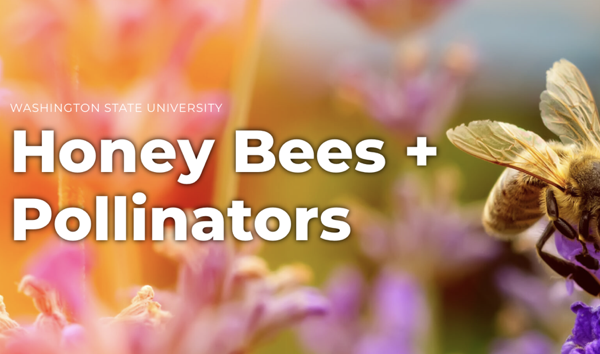
The WSU Honey Bees + Pollinators Program is dedicated to fostering resilient ecosystems in Washington and beyond. We intertwine innovative research, community engagement, and education to safeguard pollinators, pivotal to our food security and environmental health.
Operating similar to a consulting firm, the WSU Energy staff of energy engineers, energy specialists, technical experts, and software developers provide unmatched energy services, products, education and information – with a focus on advancing the environmental and economic well-being of our customers.
The Climate Extremes Lab at Washington State University aims to advance the scientific understanding of extreme weather events that affect communities around the world and how such extremes are affected by the warming our planet is experiencing.
Through innovation and discovery, education and advocacy, WSU Breadlab is leading the movement to put nutrition and sustainability at the center of our conversation about food. We do it by developing agronomically sensible and economically viable grain crops…
The Master Gardener Program, founded in 1973 by WSU, consists of more than 4,000 volunteers spread over all counties across the state. Master Gardeners donate more than a third of a million hours each year to educational outreach regarding horticulture and environmental stewardship. Climate Change is one of the program’s key priorities
Master Gardener Program volunteers formed a state-wide group focused on climate change. The focus of the group is to leverage the ‘boots on the ground’ strength of the program and create educational outreach that can be delivered to communities in each of Washington’s 39 counties.
Institute for Northwest Energy Futures WSU Tri-Cities
INEF is meeting the global challenge of developing a sustainable clean energy future, using an integrated systems approach to optimize the interrelationship between emerging clean technology solutions, existing resources, and the economic, social, and political ramifications of these solutions.
Current estimates show that 30-40 percent of the food supply in the U.S. is wasted each year. This is a serious problem for climate change, because methane is a greenhouse gas that heats the atmosphere up to 80 times faster than carbon dioxide.
Clark County WSU Extension became a certified Green Business in 2022 through the Clark County’s Green business program and established a Green Team with a focus on driving sustainable practices and initiatives that educate the community to support a healthy resilient workplace.
AgWeatherNet’s (AWN) mission is to collect and deliver quality spatiotemporal weather data across the state of Washington that drives on-target forecasts, models, and climatology.
Our rapidly changing climate is affecting everything we do, everywhere. To make impactful improvements, we need to look beyond the borders of WSU to the many other organizations across our state who’s mission is to make things better today and into the future.
The Gonzaga Institute for Climate, Water and the Environment
The Gonzaga Institute for Climate, Water, and the Environment engages in regional capacity building, scholarship, and teaching to promote the flourishing of Inland Northwest communities, waters, and lands in the face of a changing climate.tice.
EarthGen equips youth to grow their power as changemakers. Through our science-based, action-oriented programs, young people gain the knowledge, skills, and experience they need to become leaders for climate solutions and environmental justice.
Washington State Climate Office University of Washington
The Washington State Climate Office (WASCO) was first established in 2003, and fills a valuable niche in Washington State, with a focus on current and past climate, providing training and capacity building, data and information resources, and pursuing applied research on climate and its impacts.
The Climate Commitment Act (CCA) caps and reduces greenhouse gas emissions from Washington’s largest emitting sources and industries, allowing businesses to find the most efficient path to lower carbon emissions.
Coastal Hazards Organizational Resilience Team (COHORT) is an interagency team established to enhance the resilience of Washington’s coastal communities and Tribes by addressing risks such as flooding, erosion, sea level rise, and other coastal challenges.
The University of Washington Climate Impacts Group builds climate resilience by advancing understanding of climate risks & enabling science-based action to manage those risks. We create impartial & actionable science and as a catalyst for building regional climate resilience.
Our vision: Our partnerships protect and sustain healthy land, air, water, and climate in harmony with a strong economy. Our mission: To protect, preserve, and enhance Washington’s environment for current and future generations.